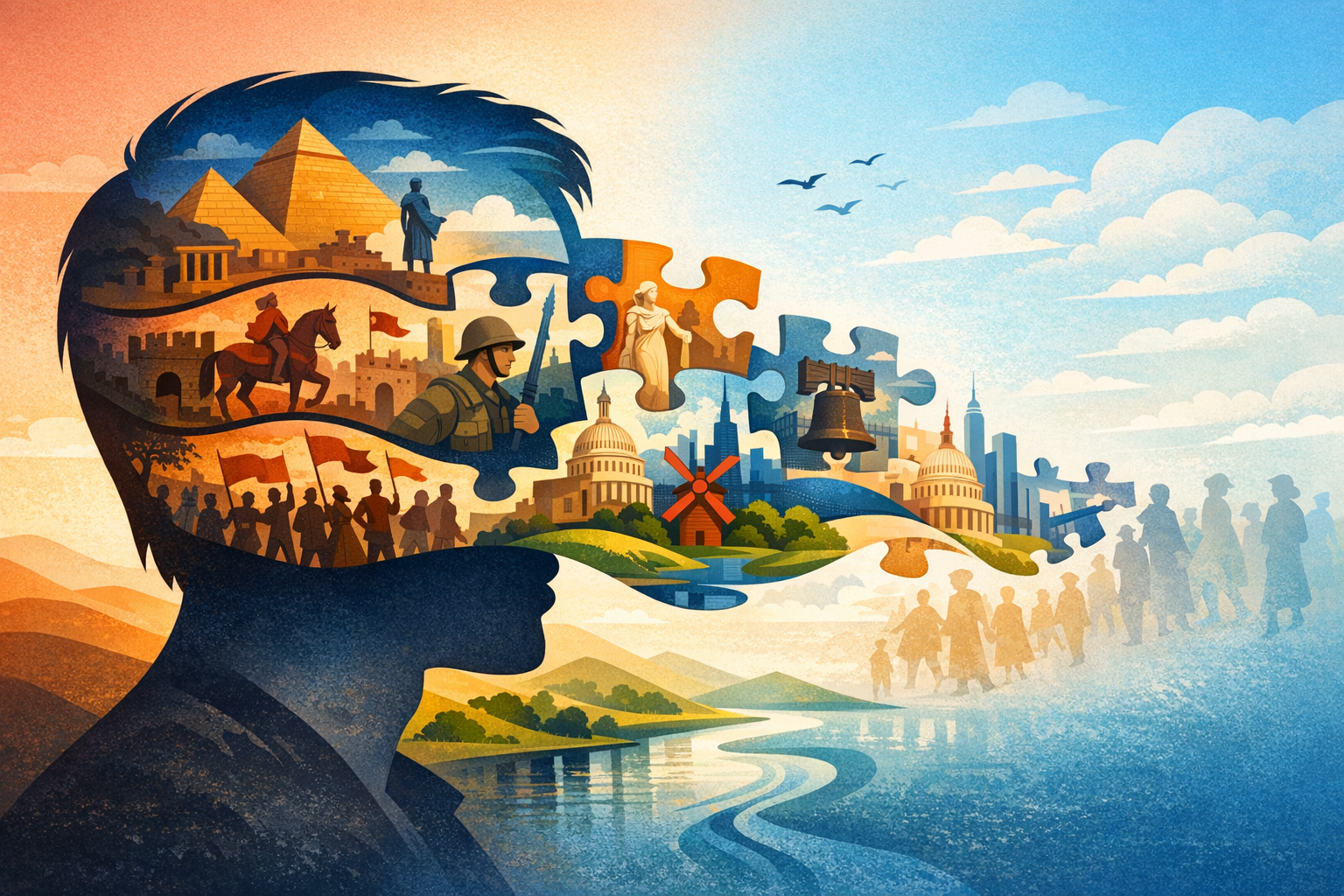
The Psychological Fabric of Memory
Memory is a deceptively intricate concept, weaving together personal experiences and collective narratives to form the foundation of our identities. At its core, memory is not just a passive repository of past events but an active agent shaping how we perceive ourselves and the world. Psychological theories suggest that memory is selective, reconstructive, and subject to myriad influences, thus playing a pivotal role in forming identities both personal and national.
Collective Memory and National Identity
Collective memory, a concept popularized by sociologist Maurice Halbwachs, refers to the shared pool of knowledge and information held by groups that informs cultural and national identities. This collective memory is typically shaped by historical narratives, which are often selectively remembered and reinterpreted to serve contemporary purposes. These narratives not only provide a sense of continuity but also foster a shared identity among members of a community.
For instance, the narrative of the American Revolution is not merely a historical account; it is a defining story that shapes American identity, underlining values such as freedom and democracy. Similarly, Germany’s approach to its history, particularly post-World War II, reflects a conscious effort to confront its past and shape a new national identity grounded in lessons learned from history.
Historical Narratives and Worldviews
Historical narratives are powerful shapers of individual worldviews. They influence how individuals perceive and interact with people from different cultural or national backgrounds. These narratives, often disseminated through education systems, media, and political discourse, can either bridge or widen cultural and ideological gaps.
For example, the differing narratives about colonial history between former colonizers and colonized nations impact current international relations and internal national policies. While one narrative may emphasize progress and civilization, the other might focus on exploitation and resistance, thus influencing contemporary dialogue on issues of reparations, race, and identity.
The Role of Memory in Social Identity
Individual identity is intricately linked to memory through the concept of social identity. Social identity theory posits that a significant part of an individual's sense of self is derived from group memberships, such as nationality, ethnicity, or religion. These group identities are often anchored in shared memories and narratives that provide a sense of belonging and purpose.
Rituals, national holidays, and monuments serve as physical embodiments of these memories, reinforcing collective identity. For instance, Holocaust memorials around the world serve as poignant reminders of the past, with the aim of fostering a global commitment to preventing future atrocities.
Challenges in Memory Perception
Despite its foundational role, memory is not infallible. Psychologists assert that memory is inherently reconstructive, subject to alteration over time. This can lead to discrepancies in how history is remembered and interpreted, often influenced by contemporary political and social climates. Such distortions can result in contested histories, where different groups remember past events in ways that justify their current beliefs and actions.
This phenomenon is evident in the ongoing debates over historical statues and symbols, where collective memory is at odds with contemporary values and interpretations. These debates highlight the dynamic nature of memory and its profound impact on identity.
Conclusion: Embracing a Multi-faceted Identity
Understanding how history and memory shape identity is crucial in a world increasingly defined by globalization and cultural interchange. As individuals and nations grapple with their past, there is a growing need to embrace complex and multifaceted identities that acknowledge historical truths while fostering mutual understanding and respect.
By recognizing the power of memory, both collective and individual, societies can navigate the challenges of the present, informed by the lessons of the past, and build a future where diverse identities can coexist in harmony.